FOREST VALLEY FARM
  • Home
  • Meet the Cows
  • Salad Bar
  • Education
  • About
  • Contact

Salad Bar

Picture

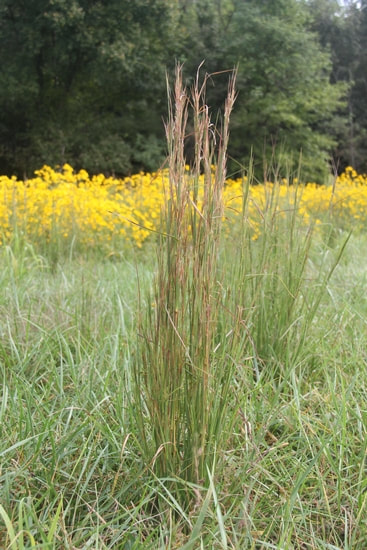
Broomsedge (Andropogon virginicus) Has A Message For The Grazier

5/16/2026

0 Comments

 
Picture
For more information on Broomsedge, see The University of Missouri WeedID Guide.  
As a cattle producer in Missouri, we see plenty of broomsedge (Andropogon virginicus) across the state. Also called "Poverty Grass" and Virginia broomsedge, this native warm-season perennial bunchgrass grows in clumps 2–4 feet tall. It starts bluish-green in summer and turns a distinctive golden-bronze color that stands out in fall and winter.

It thrives in poor, acidic, low-fertility soils—exactly the kind of ground many of us have in old pastures and hay fields. While it provides decent winter cover for wildlife, it’s not good cattle forage once it matures. Mature broomsedge is low in protein and palatability, so cattle tend to avoid it.

Seeing a lot of broomsedge is a red flag for low soil nitrogen and phosphorus. We use it as a visual cue that it’s time to soil test and consider amendments or improved forage varieties.

In management, we rely on timely mowing, grazing pressure, or prescribed fire to keep it from taking over. It can dominate disturbed or worn-out pastures quickly if left unchecked.  The best practice we've found is to unroll hay in these areas.  This adds nutrients and organic matter that will minimize the growth of broomsedge.

Broomsedge has its place in the landscape and supports some wildlife, but on productive cattle ground, we work to maintain a better mix of nutritious forages. It’s a tough native grass that reminds us how important soil fertility and pasture management really are.
0 Comments

Your comment will be posted after it is approved.


Leave a Reply.

Site powered by Weebly. Managed by Directnic
  • Home
  • Meet the Cows
  • Salad Bar
  • Education
  • About
  • Contact